
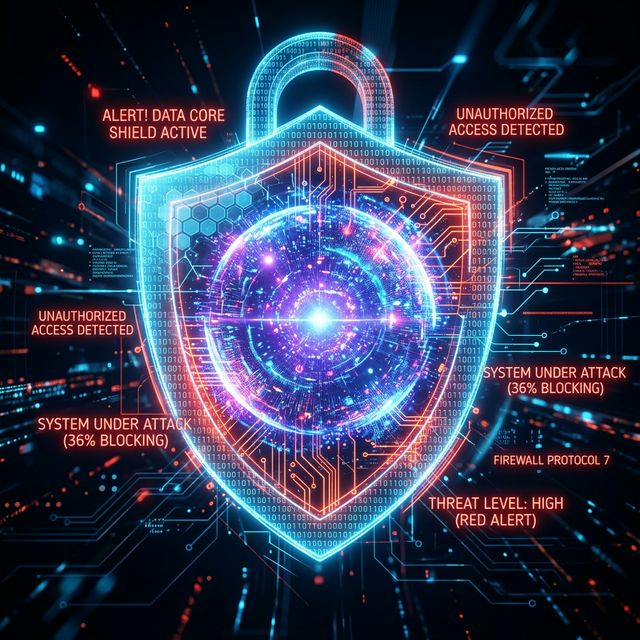
The rapid acceleration of software delivery pipelines has created a massive headache for cybersecurity teams. With AI agents pushing code into production at unprecedented speeds, legacy security paradigms are failing. Enter the evolution of DevSecOps.
Shifting Left to the Extreme
Traditional “shift left” security involved scanning code during the pull-request phase. Today, DevSecOps tools are integrating directly into the IDE. The moment a developer (or an AI agent) types a line of code, real-time static application security testing (SAST) evaluates the algorithmic logic for injection vulnerabilities, memory leaks, and dependency flaws.
AI Fighting AI
The cybersecurity arms race in 2026 is largely AI versus AI. Cybercriminals are using LLMs to generate highly sophisticated, polymorphic malware profiles and craft zero-day exploits. To combat this, enterprise security operations centers (SOCs) are deploying localized AI sentinels that monitor network traffic anomalies and quarantine microservices autonomously the second suspicious lateral movement is detected.
“You cannot defend against an automated, AI-driven cyberattack with manual human analysis. By the time the dashboard alerts you, the exfiltration is already complete.” — CISO, Global Financial Group
The next frontier is Continuous Compliance, where AI systems not only secure the code but mathematically prove to compliance auditing frameworks that the immutable infrastructure adheres to SOC2 and ISO standards dynamically.