
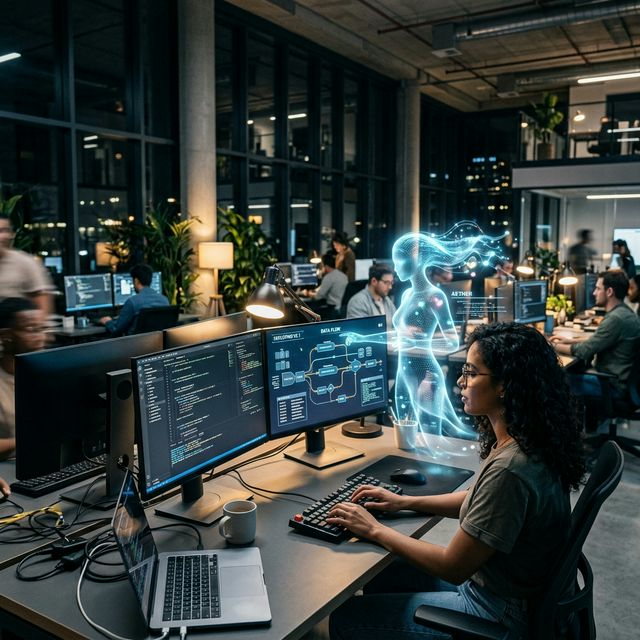
The conversation around AI has dramatically shifted. We are no longer talking about conversational chatbots that simply answer questions; we have entered the era of Agentic AI. These autonomous software agents don’t just generate text—they devise plans, utilize external tools, and execute multi-step workflows with zero human intervention.
From Chatbots to Digital Employees
Projections from early Q1 2026 suggest that nearly 40% of enterprise software applications will integrate task-specific AI agents by the year’s end. We are seeing platforms like Nvidia’s Agent Toolkit (combining OpenShell and Nemotron super-models) empowering businesses to deploy agents that can autonomously audit financial logs, trigger server reboots, and manage HR ticketing queues.
Key Characteristics of Agentic Frameworks:
- Self-Correction: Agents can evaluate their own output and pivot strategies if a sub-task fails.
- Tool Mastery: They can browse the web, write to databases, and query APIs.
- Long-term Memory: Vector databases allow agents to remember user preferences across months of interaction.
The Rise of Claude Cowork and Manus
Anthropic’s recently announced Claude Cowork platform extends these capabilities to everyday knowledge work. Imagine an agent that reads your inbox, drafts replies, updates your CRM, and schedules follow-up meetings—all running in the background while you focus on deep work. Similarly, the Meta-backed desktop app Manus has launched, enabling AI agents to control native desktop applications.
The workforce is evolving. The question is no longer how well you can use software, but how well you can manage your digital agents.